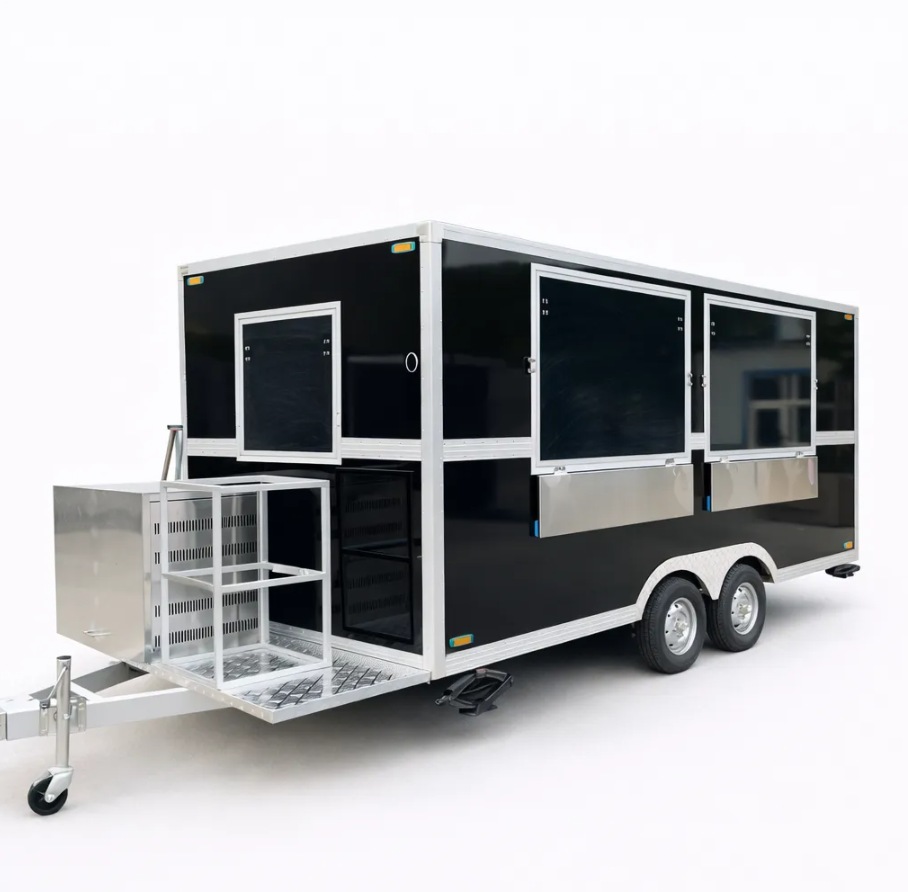
Why a trailer that sits still breaks faster than one that moves
A taco trailer owner I used to see at a weekly market parked his unit behind a storage shed every November and did not touch it again until April. On year three, he opened the doors to find a rusted floor seam, a soft spot in the wall where melted snow had seeped in, and a refrigerator seal that had turned brittle from cold cycling. The health department failed his first inspection of the season, and he lost three prime weekends waiting for repairs. What stung most was that none of the damage came from the road. It came from sitting still with moisture trapped inside. Trailers that roll every day naturally ventilate and shake off standing water. A parked trailer needs active protection. This reality flips the common assumption that low mileage means low wear. For a concessions trailer, idle months are the most aggressive destroyer of value, and a maintenance plan must treat storage season as seriously as peak season.
The shell and seams: keeping water out is a daily fight
The single greatest enemy of any trailer is water finding its way behind the skin. A concessions trailer has dozens of linear feet of seams where roof meets wall, wall meets floor, and around every window, vent, and door frame. Manufacturers use butyl tape, silicone sealant, or polyurethane caulk to seal these joints, but every material ages. The Recreation Vehicle Industry Association recommends inspecting roof and sidewall sealants every ninety days at minimum, and resealing any cracked or separated bead immediately. On a concessions trailer, the stakes are even higher because kitchen humidity condenses on interior metal surfaces. If that condensation cannot drain or evaporate, it pools at the lowest corner and starts rust that spreads beneath the flooring. A practical defense is to keep a tube of compatible sealant in the trailer at all times, run a bead of food grade silicone around sink and prep table edges to stop water from seeping under fixtures, and check the underside of the trailer after heavy rain for any drips coming through the floor. These small habits keep the envelope intact and prevent the structural rot that totals a trailer long before its time.
Running gear that gets ignored until a wheel passes you on the highway
The wheels, tires, axles, and suspension on a concessions trailer carry thousands of pounds of kitchen equipment and inventory, often at highway speeds. Yet many operators never think about their running gear until something fails. The National Highway Traffic Safety Administration provides a pre trip inspection checklist that includes tire pressure and tread depth, lug nut torque, suspension leaf spring condition, and brake function if the trailer has electric brakes. Trailer tires degrade by age as well as mileage. The tire industry recommends replacing trailer tires every five to seven years regardless of tread depth, because the internal cords weaken from ozone and temperature exposure. Wheel bearings need repacking with high temperature grease every twelve months or twelve thousand miles, whichever comes first. A bearing that runs dry can seize at sixty miles per hour and send a wheel assembly bouncing across traffic. For a food business, that means missing events, losing revenue, and potentially facing liability claims. An hour under the trailer with a grease gun and a torque wrench once a year costs almost nothing compared to the alternative.
The hidden toll of kitchen grease, moisture, and electrical load
Inside a concessions trailer, the combination of heat, oil vapor, and moisture attacks components in ways a home kitchen never does. Grease laden air settles on electrical wiring, light fixtures, and vent fan motors. Over time, that sticky film attracts dust and becomes a fire hazard. NFPA 96, the standard for ventilation control and fire protection of commercial cooking operations, applies to mobile concessions just as it does to brick and mortar kitchens. It requires that hood filters be cleaned regularly and that the exhaust duct be inspected for grease buildup. On the plumbing side, water tanks and lines must be fully drained and blown out before freezing temperatures arrive, because a single cracked pipe behind a cabinet wall can cost hundreds to repair and keep the trailer off the road for days. The electrical system also needs attention. A trailer that runs a coffee machine, a panini press, and a water heater on a single circuit may be within its rated capacity, but if the connections are loose or the breakers are worn, the panel can overheat. A yearly torque check on all electrical connections and a load test on the generator or shore power inlet is cheap insurance.
A seasonal maintenance rhythm that pays for itself
The operators who keep their trailers running for a decade or more do not rely on memory. They follow a rhythm. Weekly tasks include wiping down seals, checking tire pressures, and cleaning hood filters. Monthly tasks include running the generator under load for thirty minutes even during the off season, testing the GFCI outlets, and inspecting the roof for debris or standing water. Annually, the trailer gets a full chassis inspection, bearing repack, sealant touch up, and a deep clean of all ventilation ducts. Every three years, the LP gas system should be pressure tested by a certified technician. These routines are not complicated, but they require discipline. The Mobile Food Vending Association has published operational surveys showing that vendors who follow a written maintenance schedule report forty percent fewer emergency repairs and twenty percent higher resale values on their trailers. That is a direct return on the time invested. A trailer that looks and works like new also earns faster health department approvals and more repeat customers.
Why the build quality of your trailer decides your maintenance workload
Every maintenance task described above becomes easier or harder depending on how the trailer was built. A frame that was fully welded and hot dip galvanized resists rust at the joints where untreated steel would flake within two seasons. Seams that were lapped and sealed with industrial grade polyurethane during assembly stay watertight years longer than those tacked together with a bead of cheap silicone. Interior materials certified for food contact and designed for wet cleaning, such as stainless steel counters and fiberglass reinforced wall panels, cut daily cleaning time and eliminate hiding spots for mold. This is where manufacturing choices directly shape the owner’s long term cost. Mingtai applies these principles across its concession trailer production. Their integrated manufacturing process, from chassis welding to interior fit out, ensures that protective treatments, sealants, and material specifications are applied consistently rather than left to chance. For an operator planning to run a food business for ten years, a trailer built with that level of care spends far fewer days in the repair shop and far more days serving customers. Partnering with a manufacturer like Mingtai means starting with equipment that is engineered for a long service life, not just a quick sale.
Table of Contents
- Why a trailer that sits still breaks faster than one that moves
- The shell and seams: keeping water out is a daily fight
- Running gear that gets ignored until a wheel passes you on the highway
- The hidden toll of kitchen grease, moisture, and electrical load
- A seasonal maintenance rhythm that pays for itself
- Why the build quality of your trailer decides your maintenance workload