U.S. Food Trailer Standards Explained: FMVSS, Food Safety & Fire Codes — How Mingtai Complies
Time : 2026-02-10
Meta (EN): A practical guide to U.S. compliance for food trailers: FMVSS lighting/tires, VIN/labels, ventilation & fire suppression, food-safe interiors, plus Mingtai’s 26 test points and documentation pack.
Intro
In the U.S., a compliant food trailer must satisfy three non-negotiable pillars: road legality (aligned with Federal Motor Vehicle Safety Standards, FMVSS, and VIN/label requirements), kitchen hygiene (adhering to FDA Food Code practices and local health department rules), and ventilation/fire safety (critical for protecting crew and customers). Navigating these requirements can be complex, as federal standards set baseline rules while state and local jurisdictions often add specific mandates—from water system specs to fire suppression details. Mingtai simplifies this process by building compliance into every stage: design, testing, and paperwork. By prioritizing compliance from the start, we help you avoid costly port-side retrofits, registration delays, and failed inspections, ensuring you move from port arrival to legal operation faster, with complete confidence.
1) Road legality: FMVSS & VIN/labels
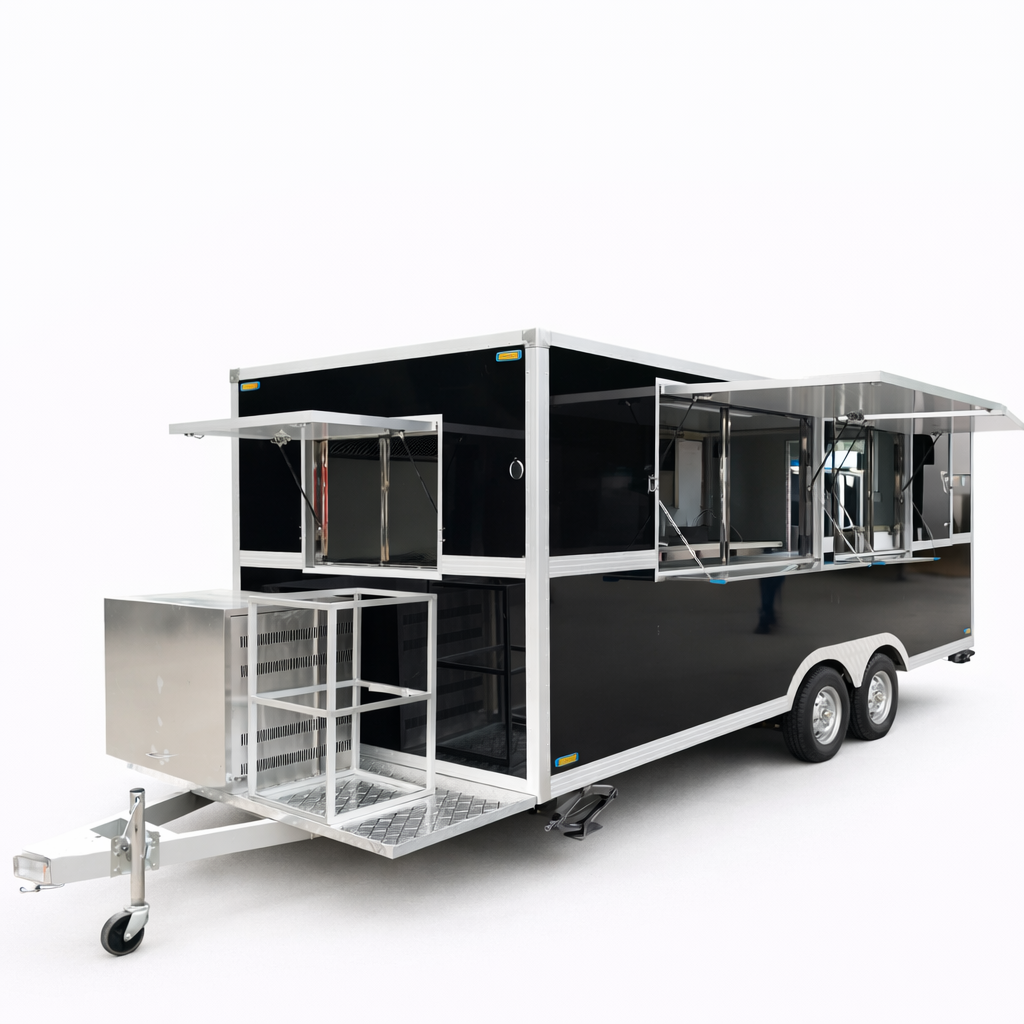
Road legality is the first step to operating legally in the U.S., as it ensures your trailer meets federal safety standards for on-road use and can be registered in any state. Compliance here centers on FMVSS requirements, proper VIN labeling, and braking safety.
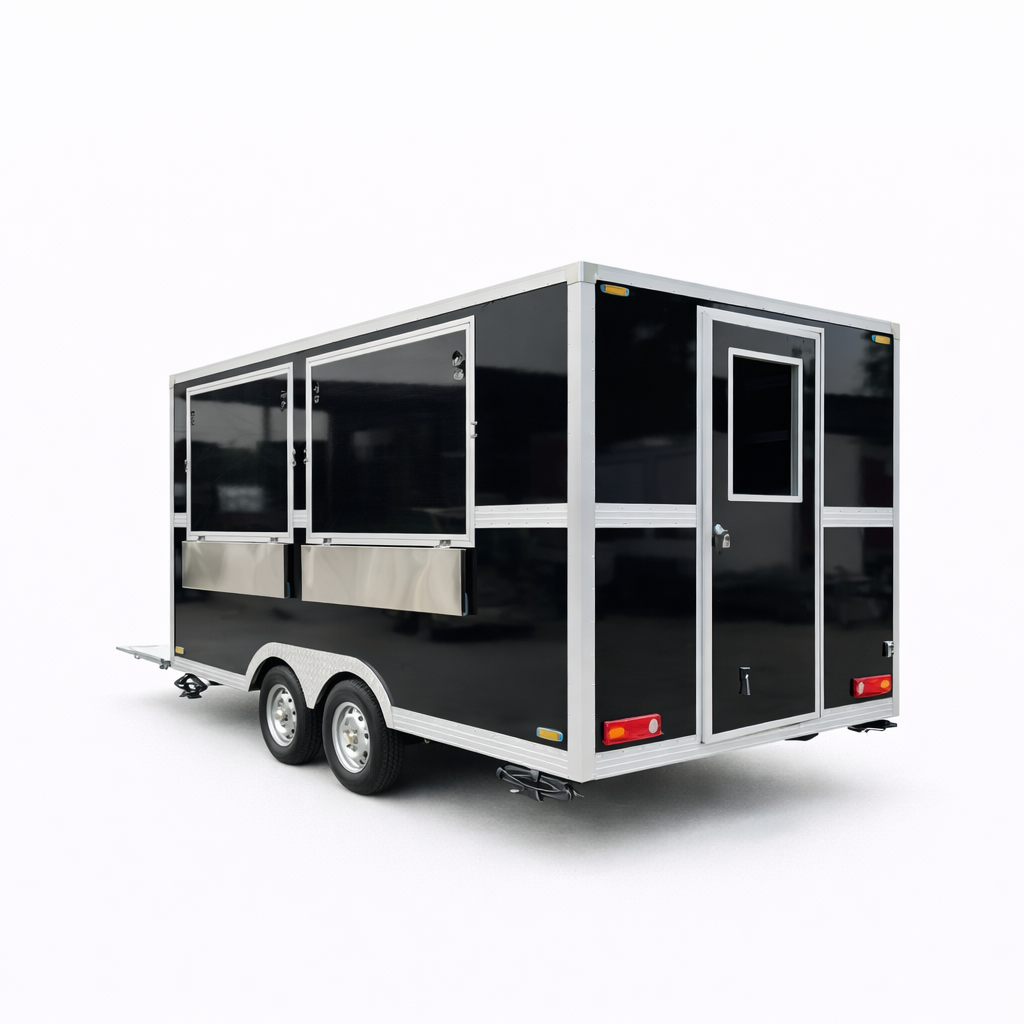
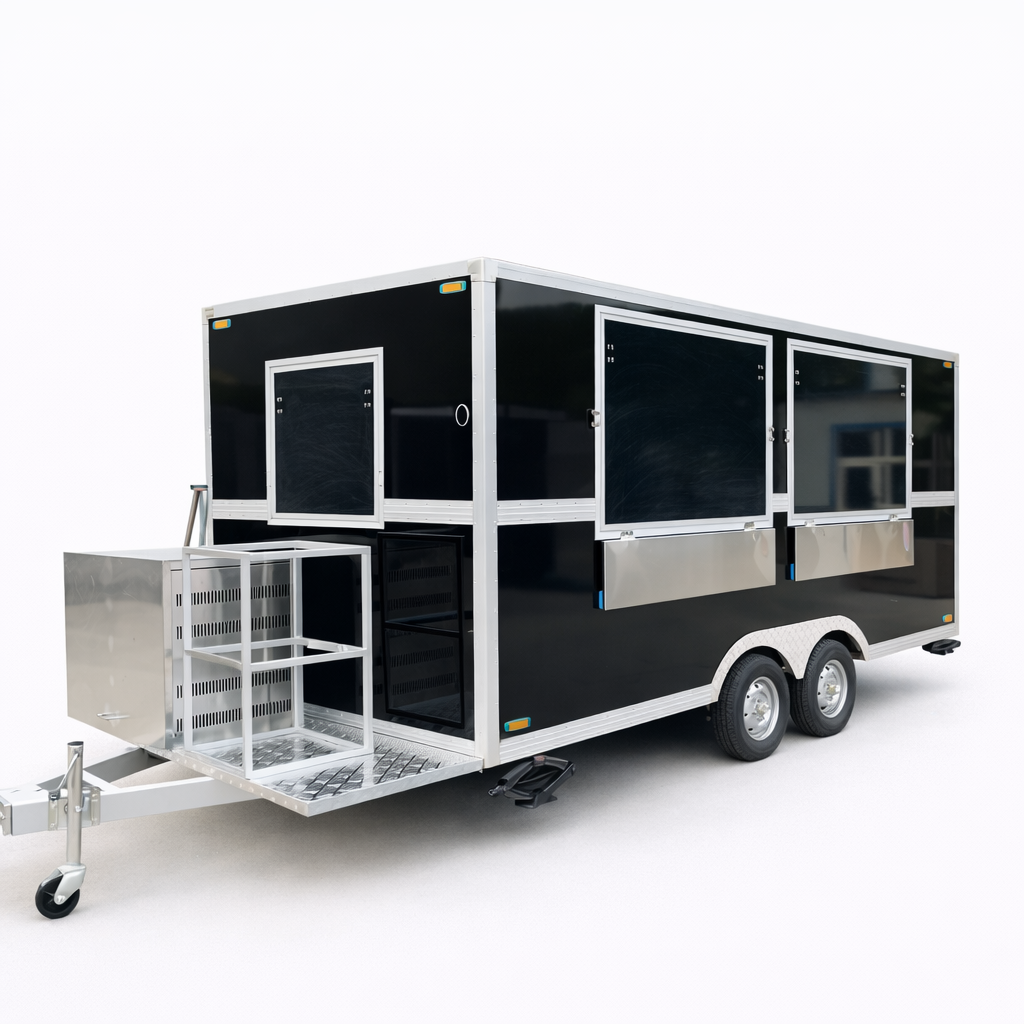
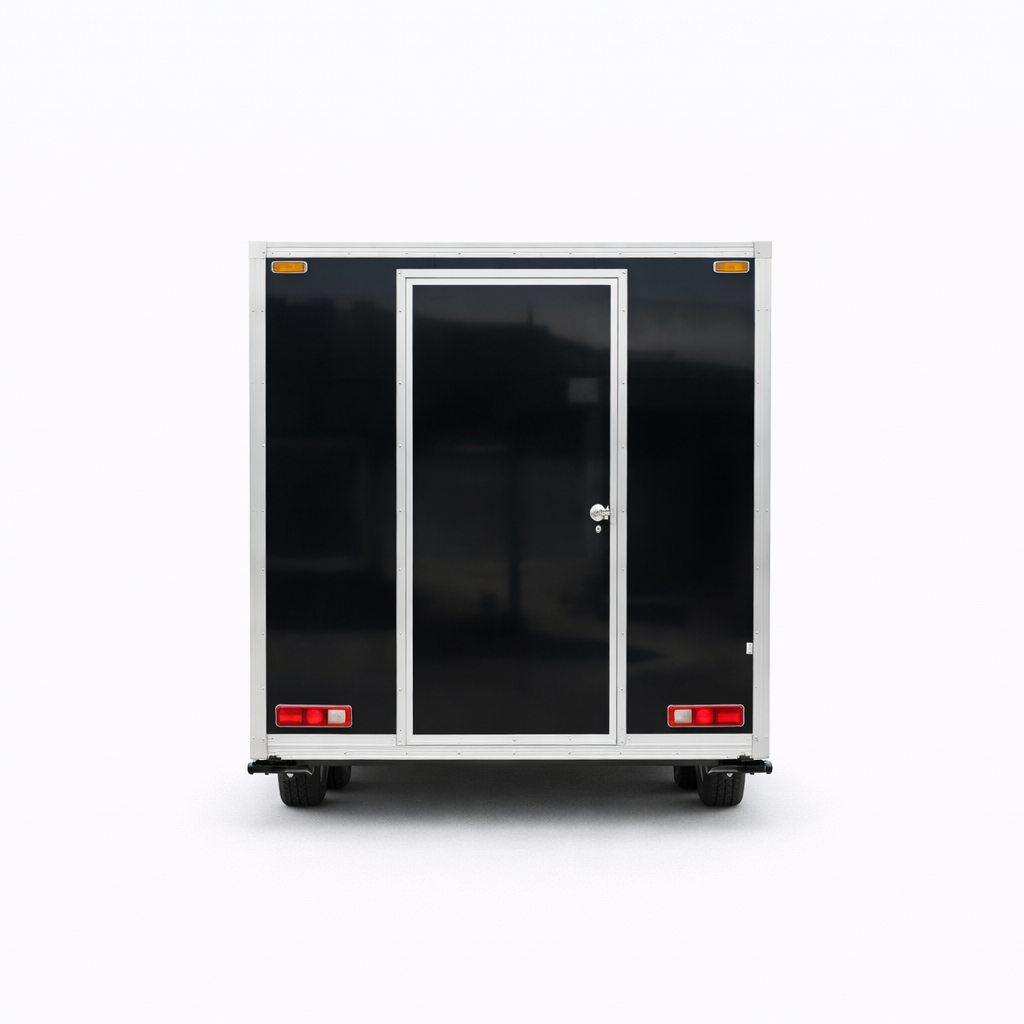
・ Lighting/reflectors (FMVSS 108): Federal Motor Vehicle Safety Standard 108 mandates strict requirements for lighting and reflectors, including correct color, position, mounting height, and visibility. For example, headlamps (if equipped) must be white, tail lamps red, and turn signals amber. Reflectors must be properly positioned to ensure visibility from all angles—rear reflectors red, side reflectors amber, and front reflectors white or amber. If your trailer exceeds certain width or length thresholds (typically 8.5 feet wide or 28 feet long), it will trigger additional conspicuity requirements, such as high-visibility red-and-white conspicuity tape along the trailer’s edges to enhance visibility for other drivers, especially in low-light conditions.
・ Tyre/rim & info (FMVSS 110/120): FMVSS 110 (tyre selection and rims) and FMVSS 120 (tire load rating) require that tyres and rims match the trailer’s Gross Vehicle Weight Rating (GVWR) and Gross Axle Weight Rating (GAWR). Cold inflation pressure must be clearly specified, as underinflated or overinflated tyres pose serious safety risks. Mandatory placards must display key information: GVWR, GAWR, tyre/rim specifications, cold inflation pressure, build date, and VIN. These placards must be durable, weather-resistant, and permanently attached to a visible location on the trailer.
・ VIN & certification (49 CFR 565/567 practice): A valid 17-digit Vehicle Identification Number (VIN) is required per 49 CFR 565 (VIN requirements) and 567 (certification labels). The VIN must be permanently stamped or affixed to the trailer’s frame, ensuring it cannot be easily removed or altered. Certification labels must be durable, legible, and securely mounted, verifying that the trailer meets all applicable FMVSS standards. This documentation is critical for registration and proving compliance during inspections.
・ Braking & breakaway: Every food trailer must have a functional service brake system capable of stopping the trailer safely. Additionally, a breakaway system is mandatory for trailers over a certain weight (typically 3,000 lbs GVWR). The breakaway system must activate the trailer’s brakes if it becomes disconnected from the tow vehicle, with clear wiring routing and secure fittings to prevent failure. Mingtai tests these systems rigorously to ensure they meet federal standards and function reliably in emergency situations.
2) Kitchen hygiene & water
Kitchen hygiene is not only a legal requirement (per FDA Food Code and local health departments) but also essential for building customer trust and avoiding health code violations. Compliance focuses on food-safe materials, cleanable design, and proper water system setup.
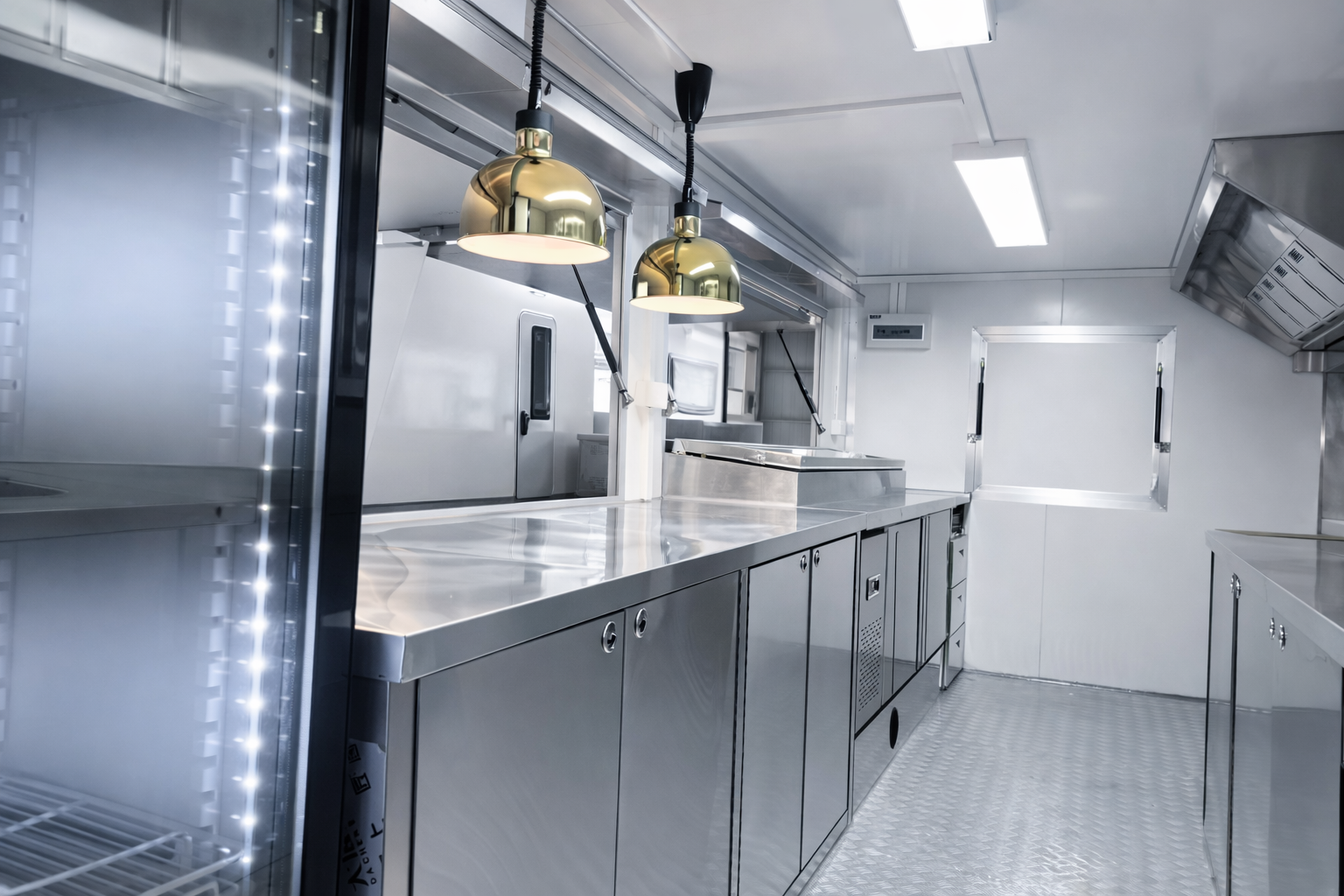
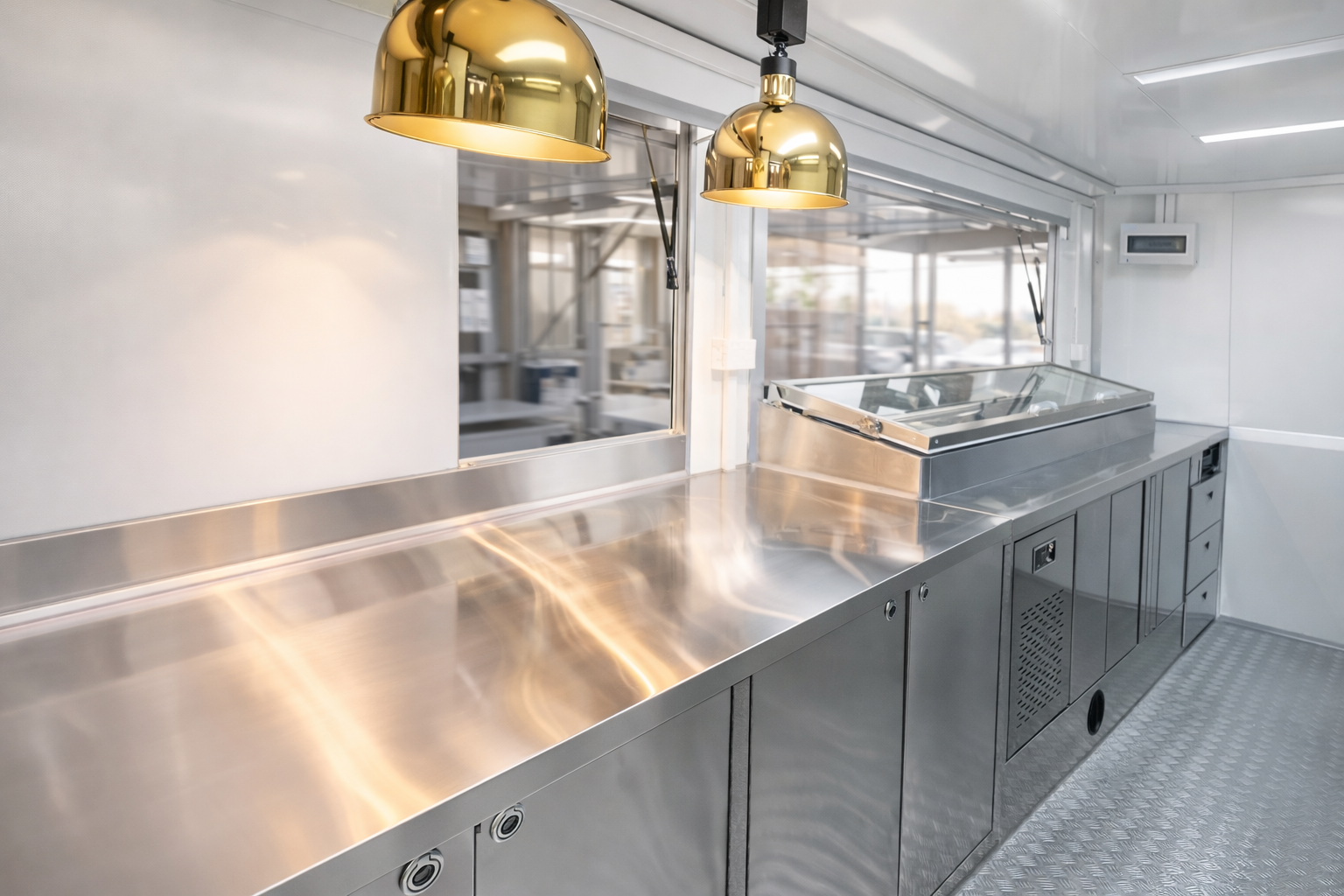
・ Materials/cleanability: Food-contact surfaces must be made of food-safe materials, with 304 stainless steel being the industry standard—its non-porous surface resists corrosion, bacteria growth, and is easy to sanitize. Washable walls (typically made of stainless steel or food-grade plastic) and coved (rounded) sealed edges eliminate hard-to-clean gaps where food residue and bacteria can accumulate. Checker-plate anti-slip flooring is mandatory to prevent slips and falls in wet kitchen environments, while also being easy to clean and sanitize after each shift.
・ Water system: Water system compliance varies by local code but includes key requirements: appropriate fresh and grey water tank capacity ratios (ensuring enough fresh water for food prep and handwashing, and adequate grey water storage to avoid overflow), 3-compartment sinks (for washing, rinsing, and sanitizing dishes/equipment) plus a dedicated handwashing sink (with hot and cold water), a water heater capable of maintaining 110°F+ water for handwashing and sanitizing, and anti-backflow devices to prevent contaminated water from entering the fresh water supply.
・ Equipment evidence: Providing detailed appliance model lists and clear nameplate photos accelerates health inspections. Inspectors need to verify that equipment (e.g., refrigerators, fryers, grills) meets food safety standards, and having this documentation readily available reduces inspection time and ensures compliance.
3) Ventilation & fire safety
Ventilation and fire safety are critical for protecting your crew, customers, and trailer from hazards like grease fires and carbon monoxide buildup. Compliance here is governed by federal and local fire codes, with specific requirements for hoods, fire suppression, and gas piping.
・ Hood & airflow: Commercial-grade ventilation hoods must be properly sized to capture grease, smoke, and heat from cooking equipment—ensuring adequate capture velocity to prevent fumes from escaping into the trailer or surrounding area. Low-noise ducting is often required to comply with local noise ordinances, especially in urban areas. Hood filters must be easily removable for cleaning, as grease buildup can pose a fire risk.
・ Suppression: UL-compatible wet-chemical fire suppression systems are mandatory for trailers with cooking equipment (e.g., fryers, grills). These systems are designed to quickly extinguish grease fires, with gas and power interlocks that automatically shut off gas and electrical power to cooking equipment when the system is activated—preventing the fire from spreading. Mingtai ensures these systems are installed correctly and tested to meet UL standards.
・ Gas piping: Gas-powered equipment requires rigid gas lines (to prevent leaks) with proper shut-off valves, regular leak checks, and secure anchoring to avoid damage during transport. Flexible hoses (if used) are limited to permitted spans (typically no longer than 6 feet) and must be approved for commercial use, with no kinks or damage that could cause leaks.
4) How Mingtai delivers “ready-to-operate”
Mingtai’s end-to-end approach ensures your trailer is fully compliant and ready to operate as soon as it arrives, eliminating the guesswork and delays of post-delivery compliance.
・ Drawings: We provide a complete set of compliance drawings, including detailed lighting/reflector layouts (to verify FMVSS 108 compliance), tyre and placard data (for registration), electrical/gas/water one-line diagrams (for inspections), and equipment cut-outs (to confirm proper installation). These drawings are tailored to U.S. standards and local requirements, ensuring they meet the needs of inspectors and registration authorities.
・ 26 tests: Every trailer undergoes 26 comprehensive factory tests, all fully documented for your compliance records. Tests include water spray (to check for leaks), load testing (to ensure structural integrity), road simulation (to validate durability and braking performance), lighting functionality (to confirm FMVSS 108 compliance), electrical safety (to test wiring and grounding), water system pressure tests (to prevent leaks), ventilation efficiency (to verify hood performance), and stability checks (to ensure safe towing). These tests ensure your trailer is inspection-ready and built to last.
・ Warranty/support: We back every trailer with a 12-month warranty covering the trailer itself and all installed equipment, providing peace of mind. Our responsive technical support team is available to answer compliance questions and assist with troubleshooting, while our spares program ensures you have quick access to replacement parts—minimizing downtime.
Closing
Compliance is a process, not a hurdle—especially in the U.S., where federal, state, and local rules overlap. By integrating compliance into every stage of design and manufacturing, Mingtai removes the stress of navigating complex regulations. With design-for-compliance principles, complete documentation, and rigorous testing, we help you move from factory to street with confidence—focusing on what matters most: serving great food and growing your mobile food business across the U.S.