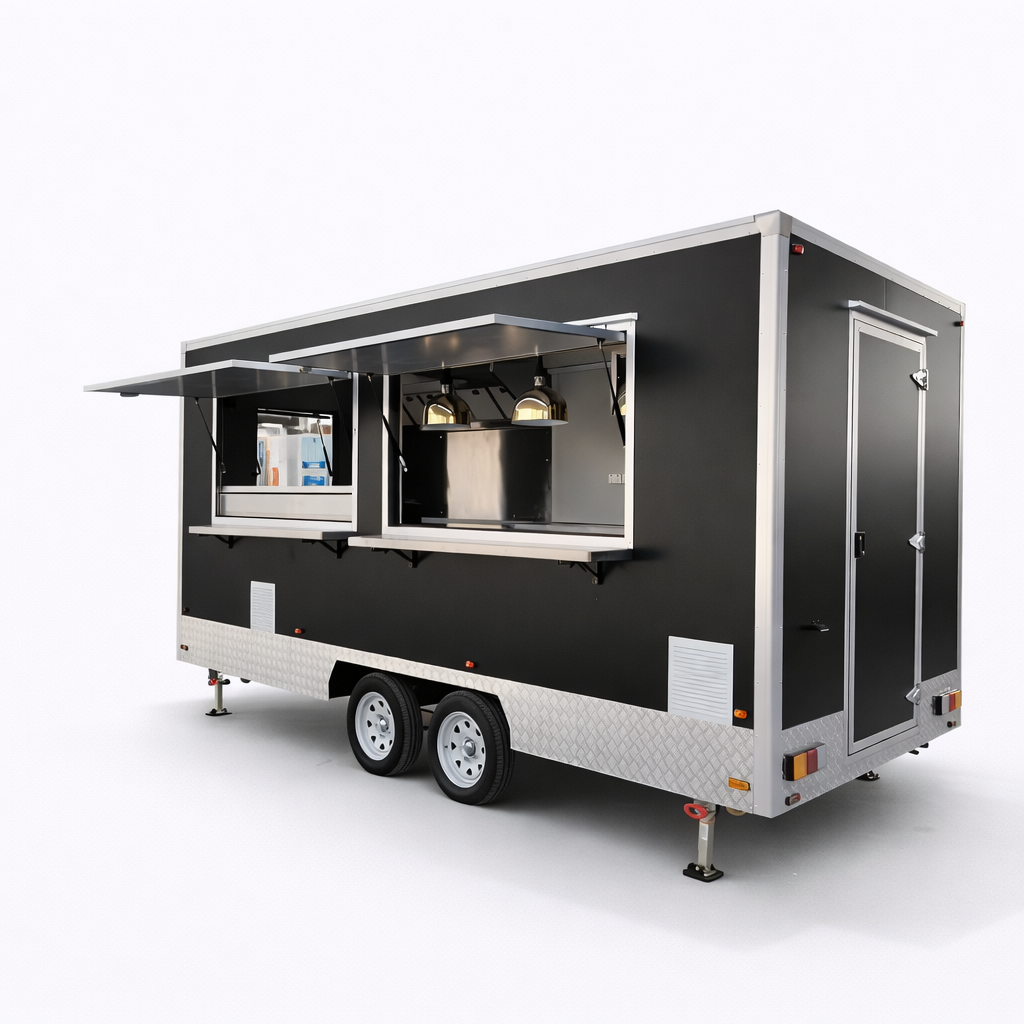
Inherent Material Properties of Stainless Steel for Food Safety
A stainless steel food trailer maintains high food safety standards mainly because food-grade stainless steel has unique inherent properties that other materials cannot match. Unlike wood that absorbs moisture and breeds bacteria, or ordinary metal that rusts and peels easily, 304 food-grade stainless steel used in stainless steel food trailer contains 18% chromium and 8% nickel, forming a dense protective oxide film on the surface. This film prevents corrosion, rust, and the migration of harmful heavy metals like lead and cadmium into food, fully complying with GB 4806.9-2023 and U.S. FDA food contact material standards.
Years of manufacturing experience and client cases prove this point. A street food operator from Northern Europe shared that they once used a painted metal trailer, which developed rust and paint peeling after half a year of outdoor use. Food residues got trapped in the damaged areas, leading to repeated mold growth and failing local health inspections. After switching to our stainless steel food trailer with 304 stainless interiors, the problem disappeared completely. The smooth, non-porous surface does not trap dirt or bacteria, and a simple wipe-down with standard cleaners keeps it hygienic daily.
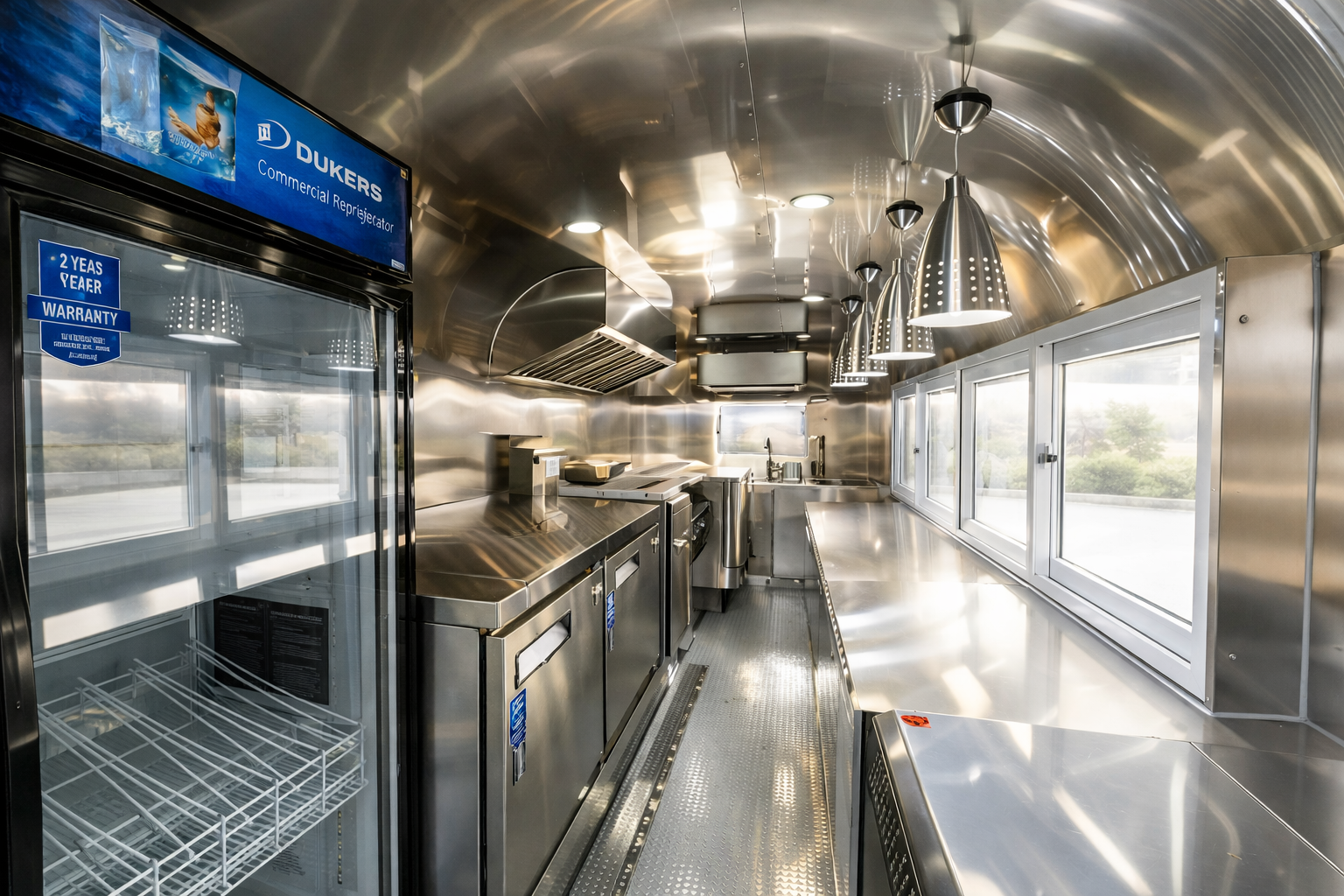
Authoritative institutions fully recognize these properties. The World Health Organization (WHO) and European Food Safety Authority (EFSA) both confirm that food-grade stainless steel is the safest material for food contact surfaces. It does not react with acidic, salty, or fatty foods, ensuring no harmful substances leach during cooking or storage. This is why our stainless steel food trailer uses NSF-certified 304 stainless steel for all food-contact areas—worktops, sinks, and interior walls—laying a solid foundation for food safety.
Hygienic Structural Design of Stainless Steel Food Trailer
Material alone is not enough; the structural design of a stainless steel food trailer is equally critical to maintaining food safety standards. Our stainless steel food trailer adopts a fully welded, seamless design with rounded corners and coved edges, eliminating gaps and dead corners where bacteria can hide. Unlike ordinary trailers with riveted or screwed joints that collect food debris and moisture, our integrated design ensures every surface is smooth and easy to clean.
This design philosophy comes from deep expertise in mobile food safety. Mobile kitchens face unique challenges: frequent movement, exposure to varying weather, and compact spaces that demand strict hygiene zoning. Our stainless steel food trailer separates raw food preparation, cooking, and serving areas clearly, with sealed stainless partitions preventing cross-contamination. The anti-slip stainless steel flooring has a smooth, washable surface that allows thorough cleaning without residue buildup.
A client from Australia experienced this firsthand. They ordered a custom stainless steel food trailer for beachside operations, where saltwater and high humidity accelerate corrosion. The trailer’s fully welded stainless frame and seamless interior resisted rust and mold perfectly. During local health inspections, officials praised the design for meeting Australia’s strict food safety regulations, as there were no hidden areas for bacterial growth. Every structural detail of our stainless steel food trailer is engineered to eliminate hygiene risks.
Strict Manufacturing and Testing Ensuring Food Safety
A stainless steel food trailer’s food safety performance also relies on strict manufacturing standards and comprehensive pre-delivery testing. Our company, as a leading manufacturer with a 70,961 m² factory and 30+ years of experience, follows Industry 4.0 quality control protocols. Each stainless steel food trailer undergoes 26 rigorous pre-delivery tests covering material safety, structural integrity, and hygiene performance.
These tests include microbial surface testing, water system leak checks, and corrosion resistance assessments. For example, every stainless steel food trailer passes a 48-hour salt spray test to ensure corrosion resistance in harsh environments. We also conduct heavy metal migration tests on all stainless components, strictly controlling lead ≤0.01 mg/kg and chromium ≤0.4 mg/kg to meet international safety standards.
A real case from a Middle Eastern fleet operator highlights this. They ordered 12 stainless steel food trailer units for high-temperature, humid regions. Each unit passed all 26 tests before delivery. After one year of use, all trailers still met local food safety standards, with no corrosion or hygiene issues. The operator noted that the pre-delivery testing gave them full confidence in the trailers’ safety and durability.
Compliance with Global Food Safety Regulations
A stainless steel food trailer can consistently maintain food safety standards only if it complies with global regulations. Our stainless steel food trailer holds CE, UL, NSF, WVTA, and COC certifications, meeting food safety rules in 200+ countries. Whether it’s the U.S. FDA’s food contact requirements, EU’s food hygiene directives, or Australia’s food safety codes, our trailers fully align with them.
This compliance is not accidental but the result of professional expertise. Our engineering team, with 35+ years of industry experience, designs every stainless steel food trailer to meet target countries’ specific standards. For example, trailers for Europe comply with EU food contact material regulations, while those for North America meet FDA and FMVSS requirements.
A Southeast Asian client benefited from this. They used one stainless steel food trailer to operate in multiple countries, including Singapore, Malaysia, and Thailand. The trailer’s global certifications allowed it to pass local food safety inspections in each country without modifications. This cross-border compliance capability is a key advantage of our stainless steel food trailer.
Long-Term Durability Sustaining Food Safety Standards
Maintaining food safety standards is a long-term task, and a stainless steel food trailer’s durability ensures consistent performance over years. Our stainless steel food trailer is engineered for a 20-year lifespan. The 304 stainless steel resists rust, corrosion, and wear even after decades of heavy use.
Unlike ordinary trailers that degrade quickly, our stainless steel food trailer maintains its hygienic properties long-term. The seamless surfaces do not crack or peel, and the welded frame resists warping. A European street food vendor has used our stainless steel food trailer for five years, through rain, snow, and extreme heat. The trailer still looks new, with no rust or mold, and passes annual health inspections easily.
This long-term durability reduces food safety risks from aging materials. Worn surfaces in non-stainless trailers harbor bacteria, but our stainless steel food trailer eliminates this risk. Backed by a 12-month warranty and 24–48 hour remote support, we ensure clients can maintain food safety standards for years.