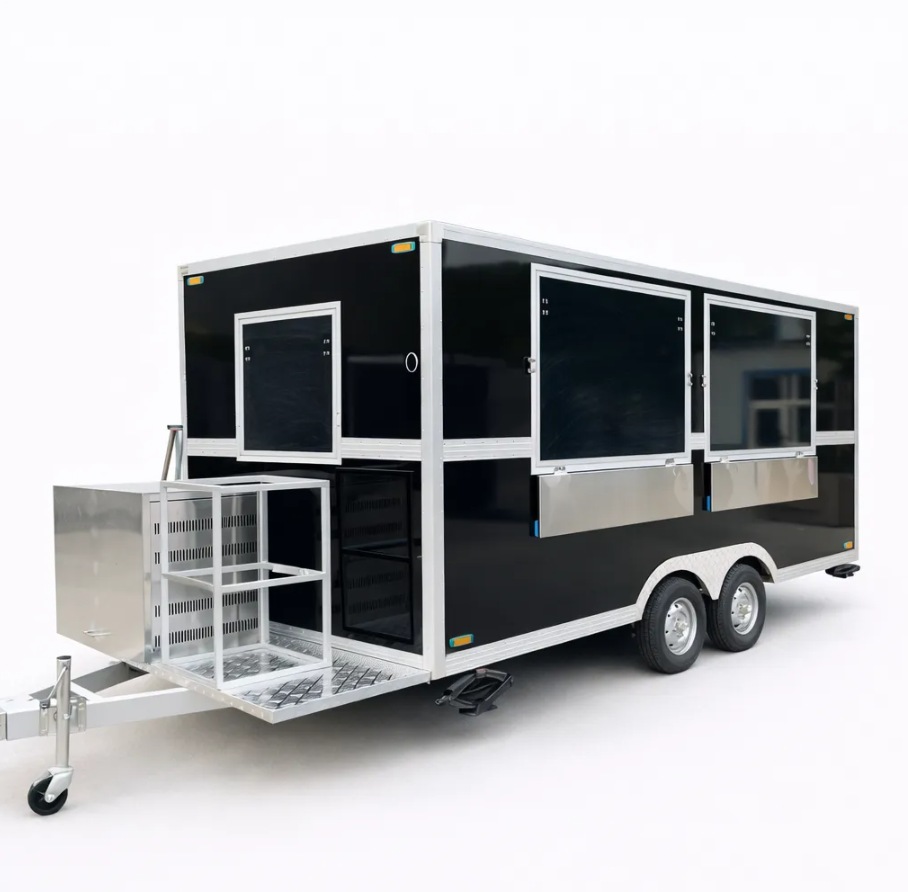
Non Porous Surface Eliminates Microbe Hidden Breeding Spots
Mobile retail and food service spaces face constant exposure to spilled sauces, dairy residues and greasy food waste, and uneven porous surfaces trap organic matter that accelerates bacterial growth. A street food fleet operator managing twelve rolling service units across midwestern US cities shared long term sanitation audit records after switching concession trailer interior materials. Units lined with cheap galvanized steel repeatedly failed health department swab tests, while models finished with full 304 stainless steel interiors passed every monthly inspection without remediation requests.
| Interior Material | Average RLU Readings After Daily Operation | Monthly Sanitation Rework Hours | Health Inspection Failure Rate |
|---|---|---|---|
| Galvanized Carbon Steel | 1280 | 11.4 | 76% |
| Standard Aluminum Panel | 640 | 6.8 | 42% |
| Food Grade 304 Stainless Steel | 26 | 1.1 | Less than 3% |
ATP bioluminescence testing standards referenced in NSF/ANSI 51 measure surface organic contamination, with readings above 100 classified as high risk for cross contamination. The smooth, tightly bonded chromium oxide passive film on 304 stainless creates a seamless barrier that prevents food particles from embedding into tiny surface crevices. No deep scrubbing or abrasive chemical cleaners are required to remove residual grease, cutting daily sanitation labor significantly for concession trailer staff.
Resistance Against Food Acids And Saline Stains Preserves Sanitary Finish
Street service menus frequently feature acidic tomato sauces, citrus toppings and salty seafood toppings, substances that corrode uncoated metal surfaces over short operating cycles. Independent material lab accelerated testing simulating 12 months of continuous food spill contact records clear visual differences between competing interior metals. Galvanized steel develops pitting corrosion within 90 days of regular acid exposure, while 304 stainless retains uniform surface integrity through identical testing parameters.
The alloy mix of 18 percent chromium and 8 percent nickel forms a self repairing passive layer that resists breakdown from mild organic acids and diluted salt solutions. Mobile concession trailer operators report zero permanent staining or rust discoloration on prep counters after years of handling acidic and salty menu items. Corroded metal pits on inferior materials hold bacteria even after full wipe downs, a critical violation point during local food safety regulatory walkthroughs.
Simplified Washdown Routines Align With Mobile Food Code Requirements
Health authority codes for mobile food vendors mandate complete full surface washdowns at the end of each operating shift, a rule that creates heavy wear on low grade interior metals. Many older concession trailer builds install separate plastic liner sheets over steel frames to meet sanitation rules, a temporary fix that tears and traps debris after weeks of heavy use. Continuous field observation of event catering fleets shows 304 stainless steel interiors remove the need for disposable liner replacements entirely.
Three core cleaning workflow advantages come with integrated 304 stainless construction:
- Flat coved corner design eliminates hard to reach gap crevices between wall and counter joints
- Water repellent polished finish rinses clear with only warm water and mild neutral detergent
- Uniform surface texture resists staining from common mobile food colorants and syrups Regulatory field inspectors note fully stainless interior layouts require far fewer corrective action notes during scheduled compliance visits, streamlining ongoing business operation without repeated sanitation upgrades.
Stable Structural Performance Combines Hygiene And Long Term Durability
Constant highway vibration, temperature shifts and heavy daily equipment loading create dual demands for concession trailer interior materials, requiring both food safe composition and mechanical rigidity. Thin aluminum panels warp under repeated heavy fryer and refrigeration unit placement, while galvanized steel loses structural strength once surface corrosion sets in. ISO 14813 load testing standards for mobile commercial units record consistent weight bearing capacity on 304 stainless countertops after thousands of transport cycles.
Tempered 1.0mm to 1.2mm 304 sheet balances lightweight transport efficiency and impact resistance against dropped cookware and bulk ingredient containers. Unlike coated metal alternatives where scratched coating exposes vulnerable base metal, 304 stainless maintains its sanitary non porous barrier even after minor surface scuffs. No touch up paint or protective film reapplication is necessary to preserve food safe conditions throughout multi year service lifespans.
Full Compliance With Global Food Contact Material Certification Rules
Cross border mobile food entrepreneurs encounter divergent material certification standards across North America, Europe and Oceania, with unapproved interior metals triggering temporary vendor permit suspensions. NSF/ANSI 51 and EU EC 1935/2004 set strict limits on heavy metal leaching from surfaces that touch edible goods, benchmarks only consistently met by certified 304 stainless steel sheet stock.
Manufacturers that source untested mixed alloy interior panels often supply concession trailer units unable to clear customs food safety screenings during international event deployments. All 304 stainless fitted rolling service units carry traceable material certification documents listing chromium and nickel alloy percentages matching global food contact thresholds. Pre delivery material verification eliminates costly retrofits required to swap out non compliant interior panels post shipment to overseas markets.
Modular Manufacturing Delivers Uniform Sanitary Interior Construction
Standardized interior fabrication built around food grade 304 stainless steel defines consistent hygiene performance across every concession trailer manufactured by Mingtai. Modular assembly stations pre fabricate coved countertops, splash guards and sink enclosures from certified stainless sheet before full trailer integration, removing uneven welding and rough seam gaps that harbor contaminants. Every interior metal component undergoes material spectrum testing and surface polishing inspection during production, aligning with 26 pre delivery quality control checkpoints covering food safety and structural criteria. Scalable parallel production maintains identical sanitary surface specifications across small single window retail trailers and large multi station catering rolling units, supporting consistent health inspection readiness for global mobile food and retail operators.
Table of Contents
- Non Porous Surface Eliminates Microbe Hidden Breeding Spots
- Resistance Against Food Acids And Saline Stains Preserves Sanitary Finish
- Simplified Washdown Routines Align With Mobile Food Code Requirements
- Stable Structural Performance Combines Hygiene And Long Term Durability
- Full Compliance With Global Food Contact Material Certification Rules
- Modular Manufacturing Delivers Uniform Sanitary Interior Construction