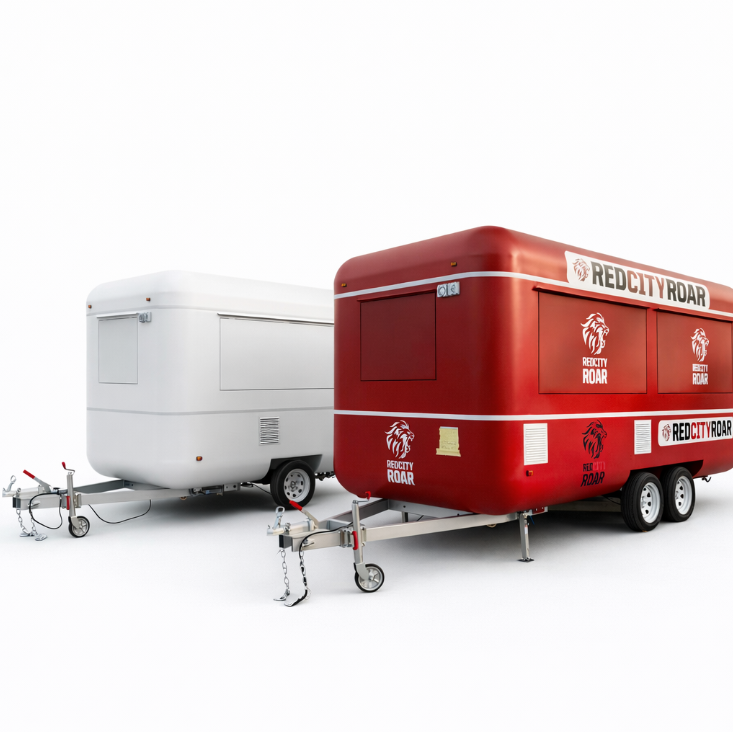
What Factory Direct Actually Changes for Resellers
A food concession trailer bought through a trading company and one bought straight from the production floor are not the same animal. The difference shows up in communication speed, spec control, and who owns the problem when something goes wrong. Factory direct supply removes a layer of markup and a layer of guessing. A reseller can talk to the people who bend the steel and wire the panel. That access matters when a client wants a specific fryer layout or a different voltage. It also matters when a shipment arrives with a dented panel or a miswired exhaust fan. Direct supply is not about a lower price. For global resellers, fewer unknowns often matter more than a few dollars saved. A direct line to the factory floor shortens the feedback loop.
Certifications That Decide Whether the Trailer Clears Customs
A mobile food trailer crossing borders needs more than good welding. Electrical systems, gas lines, and vehicle chassis each carry their own rules. The EU Machinery Directive 2006/42/EC and CE marking apply to many units sold in Europe. North America often looks for NFPA 1192 for recreational vehicles and ANSI/UL 60335 for appliances. Australia and New Zealand reference AS/NZS 3000 for electrical work. Export factories should provide documentation, not just a sticker. ISO 9001:2015 asks for controlled processes and traceable records, a useful baseline for resellers. The table below shows common market requirements and what a direct factory relationship can clarify.
| Market | Key certification or standard | Common reseller headache |
|---|---|---|
| European Union | CE, Machinery Directive 2006/42/EC | Missing technical file |
| United States | NFPA 1192, UL 60335 | Voltage and plug mismatch |
| Australia / NZ | AS/NZS 3000 | Wiring color code errors |
| Middle East | SASO or GSO depending on country | Documentation gaps at port |
| Canada | CSA or ULC where required | Gas line certification delays |
Customization Without Blowing Up the Schedule
Global resellers rarely sell the same trailer to every client. One buyer wants a charcoal grill and a sink. Another wants a coffee bar with a three-group espresso machine and a display fridge. A third wants a mobile shop with shelving and a POS counter. Factory direct supply makes customization practical because the design team and the production line sit in the same building. Changes can be reviewed for structural impact before cutting metal. A better approach is to start with the power budget, then the water system, then the layout. If the generator cannot carry the load, a bigger generator is not the only answer. Sometimes the fix is a different appliance or a smarter circuit plan. That conversation happens faster with direct access. That is how a custom trailer stays profitable.
Quality Control That Survives the Ocean Trip
A food concession trailer is a vehicle, a kitchen, and a retail space at the same time. It gets bounced on a ship, dropped at a port, and towed on rough roads. Weak points show up after delivery, not before. A factory with a real QC process checks the frame, the welds, the electrical panel, the gas connections, and the finish before packing. A 2022 shipment of twelve mobile food trailers to an Australian reseller arrived with two units that failed the local electrical inspection. The issue was not the main panel. It was the color coding on the exhaust fan wiring. The factory had used a domestic standard. The reseller had to rewire both units and missed a festival deadline. After switching to a direct supplier that reviewed AS/NZS 3000 before production, the next shipment cleared without rework.
Logistics, Packing, and the Cost of a Bad Container Plan
Shipping a food trailer is not like shipping furniture. The unit needs bracing, moisture control, and protection for glass and stainless surfaces. A factory that exports regularly knows how to load mixed containers and how to document the packing list for customs. It also knows which ports handle RORO and which handle flat racks. A reseller who buys through a trader often gets a packing list that says "1 trailer" and nothing else. That vagueness costs money when a claim is filed or when a customer asks for a specific unit number. Direct supply allows the reseller to specify packing requirements, request photos before loading, and confirm tie-down points. A clear packing plan also protects the reseller's margin. Damage claims eat profit faster than freight costs.
Why a Long-Term Factory Partner Beats a One-Time Deal
A repeat supply relationship is an asset. A factory that knows the reseller's market, voltage, and customer preferences can pre-empt problems. It can hold a golden sample, track revision history, and warn about material lead times before they become delays. Mingtai operates a 70,961 m2 facility with more than 200 employees and a catalogue of over 200 mobile food trailer and mobile retail models. That scale supports customization for global brands and entrepreneurs, and it gives resellers a production base that can handle repeat orders without reinventing the spec every time. The right factory partner does not just ship a food concession trailer. It helps the reseller build a business that can scale. That partnership is worth more than a one-time discount.
Table of Contents
- What Factory Direct Actually Changes for Resellers
- Certifications That Decide Whether the Trailer Clears Customs
- Customization Without Blowing Up the Schedule
- Quality Control That Survives the Ocean Trip
- Logistics, Packing, and the Cost of a Bad Container Plan
- Why a Long-Term Factory Partner Beats a One-Time Deal