Why Buying Factory Direct Changes the Price Structure
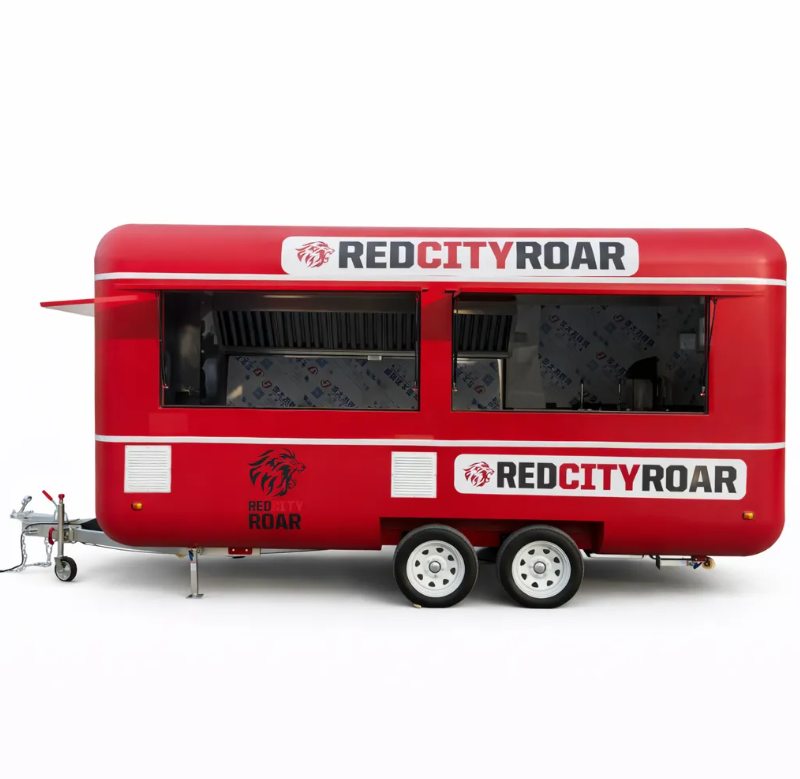
The price a buyer pays for a food trailer with full kitchen depends heavily on how many hands the product passes through before delivery. A typical supply chain runs from the factory to an exporter, then to an importer, then to a regional distributor, and finally to the operator. Each layer adds its own margin, and by the time the trailer reaches the buyer, the price can be 40 to 80 percent higher than the factory gate price. Buying direct removes those layers. The tradeoff is that the buyer has to handle more of the process themselves, including shipping, customs, and final delivery. For operators who are willing to manage those steps, or who work with a factory that provides export support, direct purchasing is often the single biggest cost lever available.
What Factory Wholesale Pricing Actually Reflects
Factory pricing is not just a lower number. It reflects a different cost structure. A factory that produces hundreds of trailers a year buys steel, panels, appliances, and wiring in bulk, which lowers the per unit material cost. Labor is organized around production lines rather than one off builds, which reduces assembly hours. Overhead is spread across more units. These savings are real, but they depend on the factory actually operating at scale. A small workshop claiming factory direct pricing is often just a reseller with a different label. The table below compares typical cost layers across supply chain models.
| Supply Model | Typical Markup Over Factory Cost | Buyer Responsibility | Price Predictability |
|---|---|---|---|
| Factory direct | Baseline | Shipping, customs, delivery | High |
| Factory to exporter | 10 to 20 percent | Customs, delivery | Moderate |
| Through importer | 25 to 45 percent | Delivery | Moderate |
| Through distributor | 40 to 80 percent | Minimal | Low |
These ranges are representative and vary by region and product complexity. The pattern is that each intermediary adds cost but also removes a task from the buyer.
The Hidden Costs That Do Not Show Up in the Quote
A low quoted price is not the same as a low total cost. Several factors can erase the savings from a factory direct purchase if they are not planned for.
-
Shipping and freight, which depends on trailer dimensions and destination port.
-
Customs duties and clearance fees, which vary by country and product classification.
-
Compliance costs, including any local certification required for commercial food units.
-
Delivery from port to site, which can be significant for oversized cargo.
-
Setup and commissioning, if the trailer requires assembly or connection on arrival.
A buyer who compares only the factory quote against a local dealer quote is comparing an incomplete number against a complete one. The honest comparison includes all the landed costs. When that is done, factory direct usually still wins, but the margin is narrower than the raw quote suggests.
Why Scale at the Factory Level Matters for Pricing
Not every factory can offer genuine wholesale pricing. The ability to do so depends on production volume, material purchasing power, and process efficiency. A manufacturer running a 70,961 square meter facility with over 200 employees and a catalogue of more than 200 models has the volume to negotiate material pricing that smaller workshops cannot match. That scale also supports standardization of common components, which reduces cost without reducing quality. The engineering team behind the operation matters too. Design leaders with over 35 years of experience can spot cost drivers during the design phase, before they are locked into the build. That is where real savings are created, not by cutting corners on materials.
A Case Where Direct Purchasing Paid Off
An operator in Southeast Asia compared two quotes for a full kitchen trailer. The local dealer quoted a delivered price that included shipping, customs, and setup. A factory direct quote came in lower on the trailer itself but required the operator to arrange freight and clearance. After working through the numbers, the factory direct option was still cheaper by a meaningful margin, but the savings came with three months of additional lead time and a significant administrative workload. The operator decided the savings were worth it, but only because the volume justified the effort. For a single trailer purchase, the calculation might have gone the other way. That is the honest reality of direct purchasing. It rewards buyers who can manage logistics and penalizes those who cannot.
Where Direct Purchasing Makes the Most Sense
Factory direct pricing delivers the most value when order volume is high enough to justify the logistics work, when the buyer has some experience with international shipping, and when the factory provides export documentation and support. It makes less sense for one off purchases where the administrative burden outweighs the savings, or for buyers who need local service and support after delivery. It is also worth noting that factory direct does not automatically mean better quality. It means a different cost structure. Quality depends on the factory's process control and material standards, which should be verified independently of the price.
How Manufacturing Scale Supports Preferential Pricing
Preferential factory pricing is not a marketing claim. It is the result of production volume, material purchasing power, and process efficiency working together. Mingtai operates a 70,961 square meter facility in Weifang with over 200 employees and a catalogue of more than 200 models covering food trailers, mobile shops, and turnkey mobile commercial complexes. The engineering and design team brings over 35 years of industry experience, which allows cost drivers to be addressed during design rather than after production. For buyers who need factory direct pricing on a full kitchen trailer without sacrificing build quality, that combination of scale and design depth is what makes the pricing sustainable.
Table of Contents
- Why Buying Factory Direct Changes the Price Structure
- What Factory Wholesale Pricing Actually Reflects
- The Hidden Costs That Do Not Show Up in the Quote
- Why Scale at the Factory Level Matters for Pricing
- A Case Where Direct Purchasing Paid Off
- Where Direct Purchasing Makes the Most Sense
- How Manufacturing Scale Supports Preferential Pricing