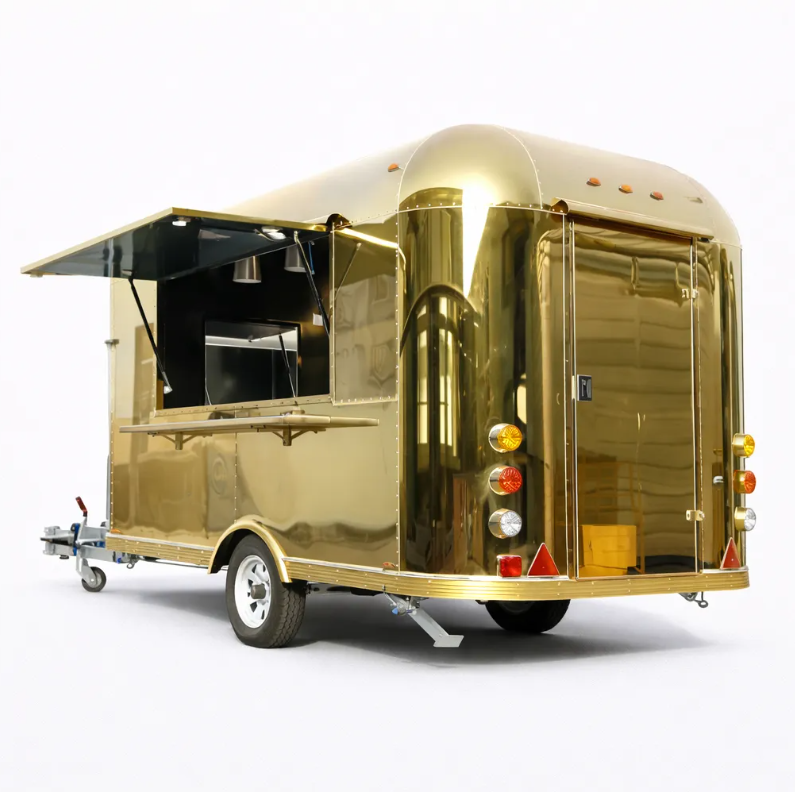
Navigating Transport Canada CMVSS and VIN Registration Hurdles
Clearing customs at the Port of Vancouver or Prince Rupert is only the first bureaucratic step when bringing an overseas mobile kitchen into North America. Before a provincial licensing office in Ontario, British Columbia, or Alberta issues a commercial license plate for an imported food trailer, the chassis must satisfy Transport Canada rules under the Motor Vehicle Safety Act. Every road-legal towable unit requires a valid seventeen-digit World Manufacturer Identifier Vehicle Identification Number alongside verifiable compliance with Canadian Motor Vehicle Safety Standards, commonly known as CMVSS. Inspectors at provincial ministries of transportation look closely at running gear components that amateur importers often overlook. Axles, electric drum or hydraulic disc brakes, breakaway battery switches, safety chains, and drawbar couplers must carry recognized North American DOT or SAE markings. Lighting wiring harnesses also have to match CMVSS 108 spacing and reflectivity layouts, meaning amber clearance markers on the front tongue and red brake, turn, and tail lamps at the rear. If an overseas workshop welds an unrated hitch coupler onto the A-frame or installs non-compliant metric tires without load ratings stamped on the sidewalls, provincial mechanics will fail the out-of-province safety inspection before a single burger ever hits the griddle.
Provincial Electrical, Propane, and Fire Suppression Mandates
Once the running gear passes highway safety checks, local municipal licensing boards hand jurisdiction over to provincial utility safety authorities and fire marshals. In Canada, electrical and gas rough-ins inside a mobile commercial vehicle face the exact same scrutiny as a brick-and-mortar restaurant kitchen. Passing local engineering sign-offs depends on locking down three technical subsystems during factory fabrication:
-
Electrical wiring under CSA C22.1 Canadian Electrical Code rules: Every breaker panel, ground-fault circuit interrupter outlet, shore-power inlet plug, and internal copper wire gauge must carry CSA, cUL, or cETL certification marks to pass inspections such as Ontario's Electrical Safety Authority or Technical Safety BC.
-
Commercial propane piping under CSA B149.1 standards: Flexible rubber hoses draped loosely through cabinets are strictly illegal for permanent commercial cooking lines; regulators require rigid Schedule 40 black iron pipe or approved corrugated stainless steel tubing routed to exterior tank cages, paired with an automatic gas shut-off solenoid valve interlocked with the exhaust hood.
-
Type I grease hood and NFPA 96 fire suppression integration: Any mobile kitchen operating deep fryers, charbroilers, or flat-top griddles producing grease-laden vapors must install a stainless steel baffle hood equipped with an automatic wet-chemical fire suppression system and a manual pull station near the exit door.
Regulatory Agency Matrix Across Major Canadian Provinces
Understanding which provincial agency governs each mechanical subsystem prevents expensive tear-outs after the unit lands at the buyer's commissary yard.
| Compliance Subsystem | Governing Canadian Standard | Ontario Inspecting Authority | British Columbia Authority | Critical Factory Pre-Build Requirement |
|---|---|---|---|---|
| Chassis, Axles & Lighting | CMVSS (Transport Canada) | Ministry of Transportation (MTO) | ICBC / Designated Inspection Facility | 17-digit WMI VIN, SAE/DOT coupler, electric brakes, breakaway kit |
| 120V/240V Electrical Distribution | CSA C22.1 (Canadian Electrical Code) | Electrical Safety Authority (ESA) | Technical Safety BC | CSA/cUL listed breaker box, GFCI receptacles, armored or conduit wiring |
| Propane Piping & Appliances | CSA B149.1 & B149.2 | Technical Standards and Safety Authority (TSSA) | Technical Safety BC (Gas Division) | CSA-certified gas appliances, rigid black iron manifold, gas interlock |
| Grease Hood & Fire Suppression | NFPA 96 & Provincial Fire Code | Local Municipal Fire Prevention Office | Local Fire Department Inspector | Stainless baffle filters, UL 300 wet-chemical nozzles, Class K extinguisher |
| Potable Water & Sanitation | Provincial Food Premises Regulations | Local Public Health Unit (e.g., Toronto Public Health) | Regional Health Authority (e.g., Vancouver Coastal) | 3-compartment dish sink + separate handwash sink, food-grade PEX lines |
The regulatory matrix above highlights a crucial financial lesson for mobile food entrepreneurs: buying an empty or pre-wired shell fitted with uncertified domestic wiring and unlisted gas valves means paying a local Canadian master electrician and gas fitter thousands of dollars to rip out the walls and re-pipe the interior from scratch.
Field Lessons from a Greater Toronto Area Poutine and Smashburger Launch
Underestimating provincial gas and health department inspections can stall a seasonal street-food launch for months. During a spring startup in the Greater Toronto Area, an independent catering operator imported a six-meter concession unit from a small, unverified broker to serve gourmet poutine and smashburgers at summer lakeside festivals. When the operator scheduled the mandatory Ontario TSSA field approval and Toronto Public Health inspection, three severe compliance failures froze the business permit. First, the broker had supplied deep fryers lacking CSA or cETL flame-failure safety valves, and the propane lines used braided low-pressure camping hoses pushed through unsealed sheet-metal holes. Second, the electrical breaker panel lacked a Canadian certification stamp and used undersized metric wire without conduit protection. Third, the interior sink cabinet only contained two basins instead of the mandatory three-compartment warewashing sink plus a dedicated handwashing basin, and the greywater holding tank was smaller than the freshwater tank. Resolving the mess required stripping out the entire cooking line. On the operator's second expansion unit the following year, working directly with an experienced export manufacturer solved every hurdle upfront: the factory built the unit with a pre-engineered CSA-compliant 50-amp electrical system, a commercial stainless steel exhaust hood, a four-sink sanitation counter with oversized waste capacity, and DOT-certified electric-brake axles, while leaving the gas manifold pre-piped for quick local CSA appliance drop-in. The second trailer cleared ESA, TSSA, and health inspections in ten days flat.
Commissary Zoning Limits and Sourcing Turnkey Mobile Units
Even a fully certified mobile kitchen must respect municipal bylaws regarding parking, generator noise, and overnight storage. Most Canadian cities prohibit parking commercial trailers on residential streets overnight or dumping greywater into municipal storm drains. Operators must sign a service agreement with a licensed commercial commissary kitchen to prep bulk ingredients, dispose of waste cooking oil, and sanitize freshwater tanks daily. Furthermore, cold Canadian autumn and winter festivals demand insulated polyurethane sandwich walls and heated underbelly water tanks so PEX plumbing lines do not freeze solid between events.
For entrepreneurs, restaurant chains, and event marketers seeking compliant, customization-ready units across food trailers, mobile retail shops, and camper solutions, Mingtai operates a massive 70,961-square-meter manufacturing facility supported by over two hundred professionals and engineering leaders with more than thirty-five years of industry experience. With a catalog spanning over two hundred customizable models engineered around international road and utility standards, the team delivers dependable, turnkey mobile commercial units built to streamline local certification across global markets.
Table of Contents
- Navigating Transport Canada CMVSS and VIN Registration Hurdles
- Provincial Electrical, Propane, and Fire Suppression Mandates
- Regulatory Agency Matrix Across Major Canadian Provinces
- Field Lessons from a Greater Toronto Area Poutine and Smashburger Launch
- Commissary Zoning Limits and Sourcing Turnkey Mobile Units