What OEM and ODM Actually Mean for Food Trailers
The terms OEM and ODM show up constantly in manufacturing discussions, but their practical meaning for food trailers is often misunderstood. OEM means the factory builds a trailer based on a design and specification provided by the buyer. The buyer owns the brand, controls the layout preferences, and dictates the equipment list. ODM means the factory already has existing designs and the buyer selects one of those platforms, then adds branding and minor adjustments. Both models have a place in the food trailer trade, and the smartest buyers understand which one fits their situation before placing an order. A distributor with a strong local brand and specific market knowledge often prefers OEM because they want the trailer built around their requirements from the ground up. A new entrant who wants to test the market quickly usually benefits from ODM because the design work is already done and production can start immediately. The key is that both paths lead to a trailer that looks and functions like the buyer's own product, not a generic shell with a logo slapped on.
The Design Conversation Starts with the Menu
Customization always begins with the food, not the trailer. The menu determines the equipment list, and the equipment list determines the trailer size, weight distribution, and power requirements. A trailer built for fried chicken needs heavy duty fryers, a powerful exhaust hood, and a fire suppression system. A trailer built for coffee and pastries needs espresso machines, refrigeration for milk, and a layout that supports fast customer flow. Getting the menu right before the design phase saves enormous amounts of money and frustration. It is far cheaper to adjust a CAD drawing than to move a fryer after the trailer has been welded together. Experienced buyers come to the table knowing their signature dishes, their expected daily volume, and their local health code requirements. That information allows the factory to recommend the right equipment combination without guesswork. The design conversation then becomes a practical engineering discussion rather than a wish list exercise.
Structural Customization Without Losing Compliance
One of the most valuable forms of customization is structural adjustment. Buyers often need specific dimensions to fit local towing regulations, particular door placements for their service style, or extra insulation for hot climates. These changes affect the trailer's frame, wall construction, and overall weight. A factory with real manufacturing capability can make these adjustments at the frame level, not just cosmetically. That distinction matters because structural changes made after production are never as strong as those integrated into the original build. For example, moving a serving window from the side to the front requires reinforcing the frame around the new opening. Doing that properly during construction is straightforward. Cutting a new opening into a finished trailer is a compromise that weakens the structure and usually voids the warranty. Buyers who plan their structural needs in advance get a stronger trailer that passes inspection without issues.
Branding and Visual Identity Beyond the Logo
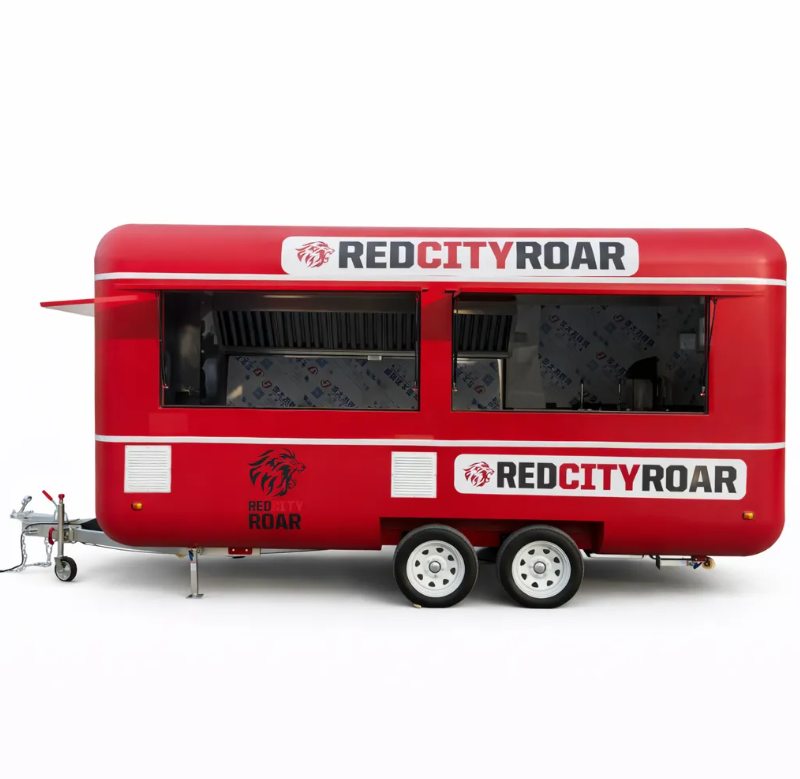
Customization goes far deeper than printing a logo on the exterior. The entire visual identity of a food trailer can be integrated into the factory build. Panel colors, trim styles, lighting packages, and the shape of the service counter all contribute to how customers perceive the business before they order a single item. A well designed trailer creates a recognizable silhouette that stands out in a crowded food park or street market. This matters because food trailers compete for attention in busy environments. A trailer that looks like every other stainless steel box gets overlooked. A trailer with distinctive lines, coordinated colors, and strategic lighting draws the eye from across the street. Factory customization allows this branding to be built into the trailer from the beginning rather than applied as vinyl graphics that fade and peel. The result is a more durable brand presence that holds up under daily commercial use and weather exposure.
The Supply Chain Advantage of Factory Customization
Customization has a direct impact on the supply chain that many buyers do not fully appreciate until something goes wrong. When a trailer is built to order in a factory, every component is documented and tracked. Replacement parts match the original build because the factory knows exactly what was installed. That makes warranty service and future maintenance dramatically simpler. A distributor who sells customized trailers also gains a competitive edge because their product cannot be easily compared to a standard catalog item. The trailer becomes a unique offering rather than a commodity. That uniqueness supports better pricing and stronger customer loyalty. It also means the distributor is not competing head to head with every other reseller who imports the same generic trailer from the same factory. Customization creates a defensible position in the market, which is exactly what serious distributors need when they are building a long term business rather than chasing one time sales.
How the Right Factory Partnership Works
The difference between a factory that says it accepts customization and one that actually delivers it becomes clear in the details. A capable factory asks about voltage requirements, local gas standards, towing regulations, and climate conditions before the design is finalized. They build the trailer on a proper chassis with the right axle rating and frame strength for the fully loaded weight. They test the electrical system and gas lines before the walls are closed. Mingtai operates with this kind of manufacturing depth, producing food trailers that are genuinely customized at the structural and systems level, not just decorated differently. The company's production process allows OEM buyers to submit their own specifications and ODM buyers to select from proven platforms, with both paths receiving the same engineering attention. That flexibility is what makes factory direct customization work in the real world, where every market has different rules and every operator has different needs. A trailer that arrives ready to work, built to the buyer's actual requirements, is worth far more than a generic unit that requires local modification before it can open for business.