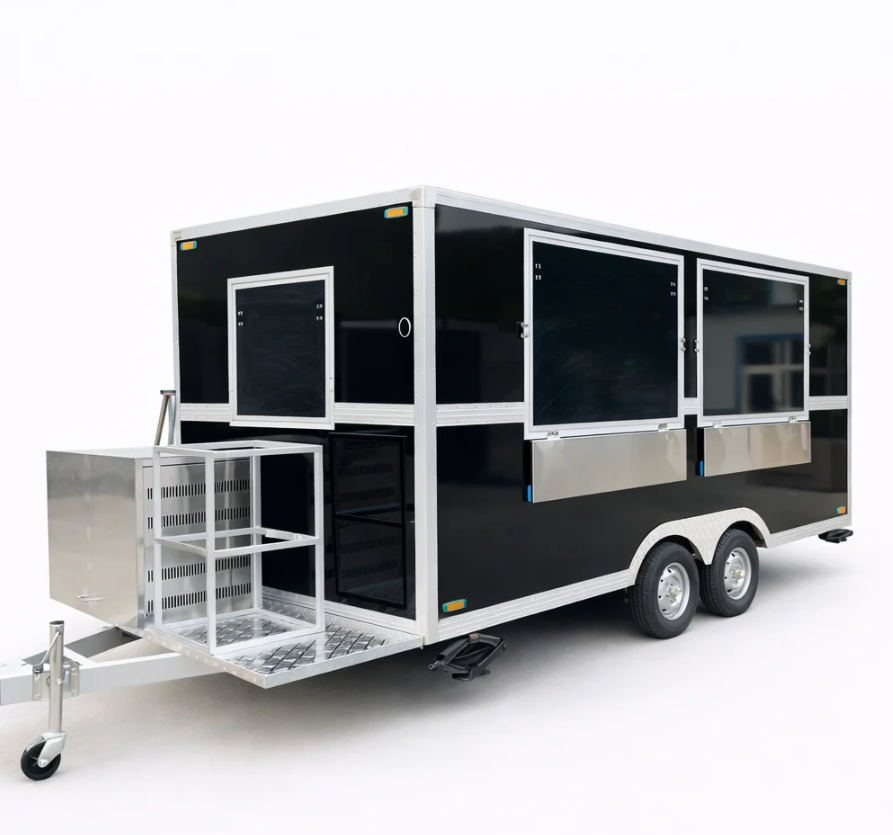
The Shift from Small Cart to Full Kitchen
Large scale catering is a different animal from street vending. A small cart can handle fifty servings of hot dogs or pretzels, but a catering operation serving three hundred guests at a corporate event needs real cooking capacity. That is where the mobile kitchen food trailer enters the picture. It is not a vending cart with a warmer. It is a complete commercial kitchen built on a trailer chassis, with enough power, ventilation, and workspace to produce food at volume. The shift from small cart to full kitchen changes everything about how an operator plans an event. Instead of pre cooking everything off site and hoping it stays warm, the team can cook on location with fresh ingredients and proper timing. The trailer becomes the central production point for the entire service, which means the quality of the food goes up while the logistical complexity goes down. Event planners notice this immediately because the trailer kitchen delivers food that tastes like it came from a restaurant, not a warming tray.
Equipment Capacity Determines Event Capability
The difference between a trailer that can handle a wedding for two hundred people and one that collapses under the pressure comes down to equipment capacity. A large scale catering trailer needs multiple high output burners, a griddle that can hold thirty burgers at once, a fryer bank with enough oil capacity for continuous service, and a convection oven that can handle sheet pans of appetizers without slowing down. The hood system must be powerful enough to extract the heat and smoke from all that equipment running simultaneously. Electrical capacity matters just as much. A trailer with undersized wiring will trip breakers in the middle of service, which is a nightmare scenario when three hundred guests are waiting for their meal. Water capacity also plays a role. A full service catering kitchen needs a fresh water tank large enough for hand washing and food prep, plus a grey water tank sized to match. Cutting corners on any of these systems saves money at purchase but guarantees problems during peak service.
Workflow Design for High Volume Service
Large scale catering is not just about having big equipment. It is about arranging that equipment so multiple staff members can work simultaneously without getting in each other's way. A well designed mobile kitchen has a clear flow from raw storage to prep to cooking to plating to service. Refrigeration sits near the entrance so ingredients come in and get stored quickly. Prep counters sit between the refrigeration and the cooking equipment so a cook can turn, take two steps, and be at the range. The service window is positioned away from the cooking heat so the expediter can assemble plates without sweating into the food. This workflow thinking is what separates a trailer built by experienced kitchen designers from one assembled by someone who just bolted equipment to the walls. When a catering team works in a space that follows their natural movement patterns, they can produce twice as much food with the same number of people. The layout becomes a productivity tool.
Transport and Setup Logistics for Large Events
A mobile kitchen trailer built for large scale catering has to survive the journey to the event site. That means the chassis, suspension, and frame must be rated for the fully loaded weight of the kitchen, not just the empty trailer. Catering operations often travel to remote locations, parks, corporate campuses, and festival grounds where the roads are not always smooth. A trailer that flexes or bounces excessively will shake equipment loose and damage gas connections over time. The setup process at the destination also matters. A well designed trailer can be leveled, connected to power, and ready to cook within thirty minutes of arrival. The gas lines should be accessible for quick connection, the electrical panel should be clearly labeled, and the stabilizer jacks should be easy to deploy. Event schedules are tight, and a trailer that takes two hours to set up eats into the preparation time that the kitchen team desperately needs.
Health Code Compliance and Inspection Readiness
Large scale catering operations face strict health code requirements, and the trailer design plays a major role in passing inspections. Hand wash sinks must be separate from dish washing sinks. Food prep surfaces need to be non porous and easy to sanitize. The water system must provide hot water at the correct temperature. Grease management must meet local fire safety standards. A trailer built with these requirements in mind will pass inspection quickly and avoid the costly delays that come with violations. The factory environment also matters here. When a trailer is built in a controlled production setting, the systems are tested before delivery. Water lines are pressure tested, gas connections are leak checked, and electrical circuits are verified. That pre delivery testing catches problems that would otherwise surface during the first inspection, when they are far more expensive to fix.
The Business Case for Investing in Mobile Kitchen Capacity
For catering companies that want to expand into larger events, a mobile kitchen trailer represents a strategic investment rather than a simple equipment purchase. It opens up new revenue streams that were previously unreachable. A company that could only cater small gatherings can now bid on corporate events, weddings, and festival contracts. The trailer also serves as a visible brand asset that markets the business wherever it goes. When a company name and logo sit on a professional mobile kitchen at a high profile event, potential clients see the capability firsthand. That visibility translates into bookings. Mingtai builds mobile kitchen trailers with the structural strength and equipment capacity needed for serious catering work. The company's manufacturing approach focuses on the details that matter during high volume service, from the thickness of the stainless steel work surfaces to the routing of the ventilation ductwork. For catering operators who need a kitchen that can keep up with their ambition, a properly built mobile kitchen trailer is the foundation that makes large scale service possible.