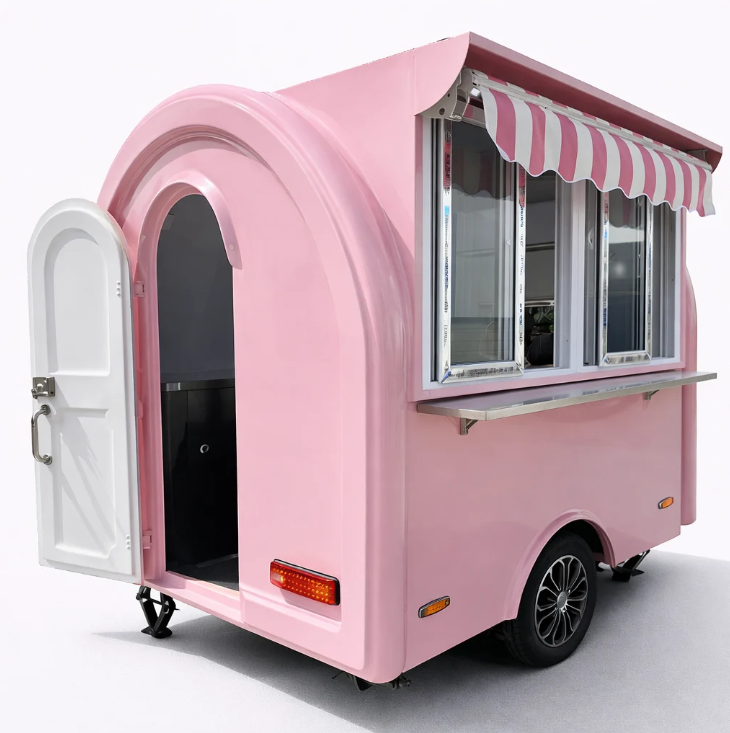
Why Standard Steel Fails in a Working Food Trailer
A food concession trailer lives a rough life. Grease, acid, salt, steam, and sanitizer hit the same surfaces every day. Standard carbon steel might survive a few months if painted, but one chip in the coating opens a rust path. Galvanized steel can handle weather, but zinc reacts with acidic foods and some cleaners. The real question is not whether the steel looks bright on delivery day. It is whether the surface still passes a hygiene inspection after a year of fryer duty. Anti-corrosion food-safe steel plate solves that problem, but only when the grade and finish match the menu and the cleaning routine. A trailer selling lemonade faces less acid than one simmering tomato sauce or frying fish. Chloride exposure from coastal air or chlorine sanitizer pushes stainless steel toward pitting. Material choice is a process decision, not a cosmetic one.
Corrosion Begins at Welds, Edges, and Hidden Seams
Flat panels rarely fail first. Weld heat tint burns away chromium oxide, leaving a weak spot. Cut edges and screw holes expose raw steel. Folded seams trap moisture and food particles. A trailer that fries fish and uses chlorine sanitizer will pit 304 stainless faster than a coffee trailer in a dry climate. Chlorides concentrate in crevices and break down the passive layer. Stagnant water in a poorly drained corner creates a perfect environment for biofilm. Design choices matter as much as alloy choice. Continuous welds, smooth ground corners, and drain holes keep water moving. Mixing carbon steel fasteners with stainless panels creates a galvanic cell. A nylon washer or a matching stainless screw is a cheap fix that prevents a rust streak. The goal is a surface that can be cleaned to a sanitary condition, not just a surface that looks clean in photos.
What Food-Safe Steel Actually Requires
Food-safe steel must be cleanable, non-absorbent, and resistant to the intended food and chemicals. NSF/ANSI 51 sets material requirements for food equipment. FDA 21 CFR 175.300 covers coatings that contact food. Grade 304 stainless handles general kitchen work. Grade 316 adds molybdenum for chloride resistance, which helps with salty or acidic menus. Surface finish also matters. A rough brushed finish traps residue. A polished finish wipes clean but shows scratches. A mirror finish may look premium, but it shows every scratch and can be slippery when wet. The table below compares common materials around a mobile food trailer.
| Material | Corrosion resistance | Food contact suitability | Main limitation |
|---|---|---|---|
| 304 stainless | Good for general food zones | Widely accepted | Pitting in high chloride |
| 316 stainless | Better chloride resistance | Preferred for salty or acidic menus | Higher cost, softer |
| Galvanized steel | Moderate outdoor corrosion | Not for direct food contact | Zinc reacts with acid |
| Aluminum | Light, oxide layer | Sometimes used for panels | Pits in alkaline cleaners |
| Coated carbon steel | Depends on coating | Only with approved food-safe coating | Coating damage exposes steel |
Not every surface needs 316. A dry storage cabinet can use 304. A fryer splash zone should not use galvanized. The menu and cleaning chemicals decide the grade. Overspending on 316 in a dry area is waste. Saving with galvanized near acid is a false economy.
Design Details That Keep the Plate Working
A food concession trailer needs steel plate as part of a system. Corner radii should allow a brush to reach the soil. Food zone welds should be continuous and ground smooth. Passivation after fabrication restores the chromium oxide layer. Drain holes should prevent standing water. Electrical boxes and insulation need spray protection if the trailer is washed down nightly. A 2B mill finish works for hidden panels. A number 4 finish suits visible areas. Mirror polish is rarely necessary and can be slippery. Fasteners should match the panel alloy. Zinc plated screws in a stainless wall leave rust trails within one season. A small design review before fabrication can catch these details and save a rebuild later. The cleaning crew should also be trained on which chemicals are safe for each alloy.
A Coastal Trailer That Failed Its First Inspection
A mobile food trailer in a coastal city used 304 stainless for the cook line. The first health inspection found rust spots along the welds and at the sink corner. The builder had cleaned with a carbon steel brush, leaving iron particles on the surface. The welds had not been passivated. Chlorine sanitizer had dried on the steel overnight. The fix took three steps. Reclean with a stainless-only brush, passivate the welds, and switch to a non-chloride sanitizer. The trailer passed the next inspection, but the delay cost two weeks of booked events. The lesson is simple. Alloy choice alone does not stop corrosion. Fabrication habits and daily cleaning decide whether the plate lasts.
Specify the Plate Before the Trailer Leaves the Shop
A specification sheet for a food concession trailer should state the alloy, finish, thickness, and passivation requirement for every food contact surface. It should list approved cleaners and warn against chlorine products on 304. Thickness affects durability. A 16 gauge panel resists dents better than a 20 gauge panel in a busy area. Thicker steel adds weight, which affects towing and fuel use. The trade-off should follow the menu and the route, not a habit. Mingtai brings 35+ years of engineering experience to mobile food trailer design, with a 70,961 m² facility and 200+ models covering food trailers, mobile shops, and turnkey mobile commercial complexes. A trailer that leaves the shop with the right plate, the right finish, and a clear cleaning plan is far less likely to fail when the lunch rush starts.